

← Klartext Business
From Give-away to Lead: How Promotional Gifts Become Measurable
Updated SilentLink-Team ≈ 3 min read
Key points
- The structural problem of classic give-aways: they create goodwill, but no return channel — 5,000 euros of trade-show budget, zero attributable contacts.
- Promotional items with a contact function have a built-in touchpoint: the recipient activates their loss protection — and sees your campaign in the process.
- The lead arises with active consent at the moment of highest attention — GDPR-clean and exportable into the CRM. But: the method stands or falls with the item's practical value.
Every trade-show stand knows the scene: the bowl of give-aways empties reliably, the stand staff read that as interest, and four weeks later no one can say what the 5,000 euros of promotional-item budget achieved. Not because they achieved nothing — but because classic promotional items have no return channel. Goodwill yes, a trail no.
This text describes how that can change — and where the limits lie.
The moment that so far belonged to no one
Between “gift accepted” and “brand forgotten”, for most items, lies: nothing. There’s simply no occasion on which the recipient consciously interacts with the gift again.
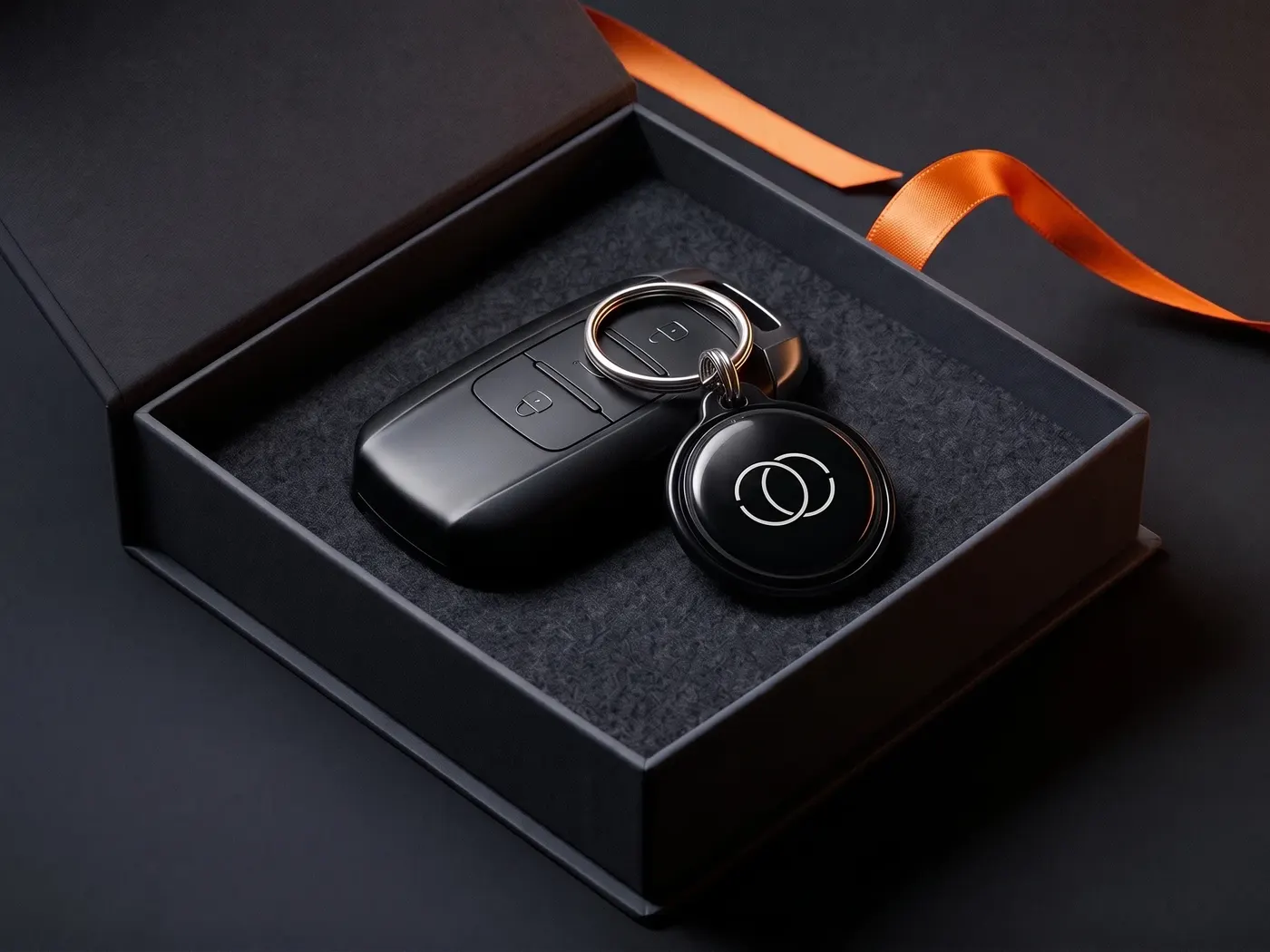
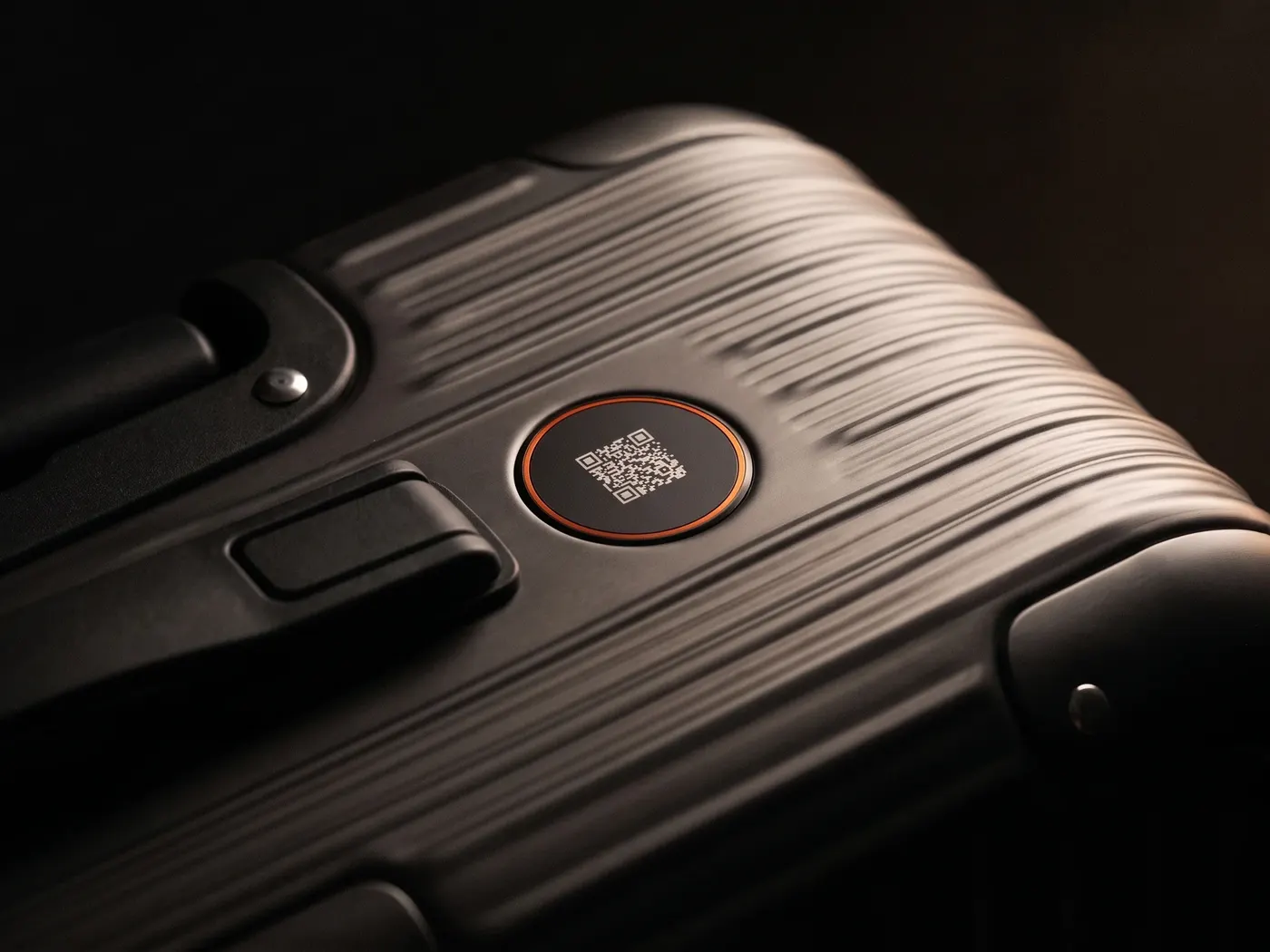
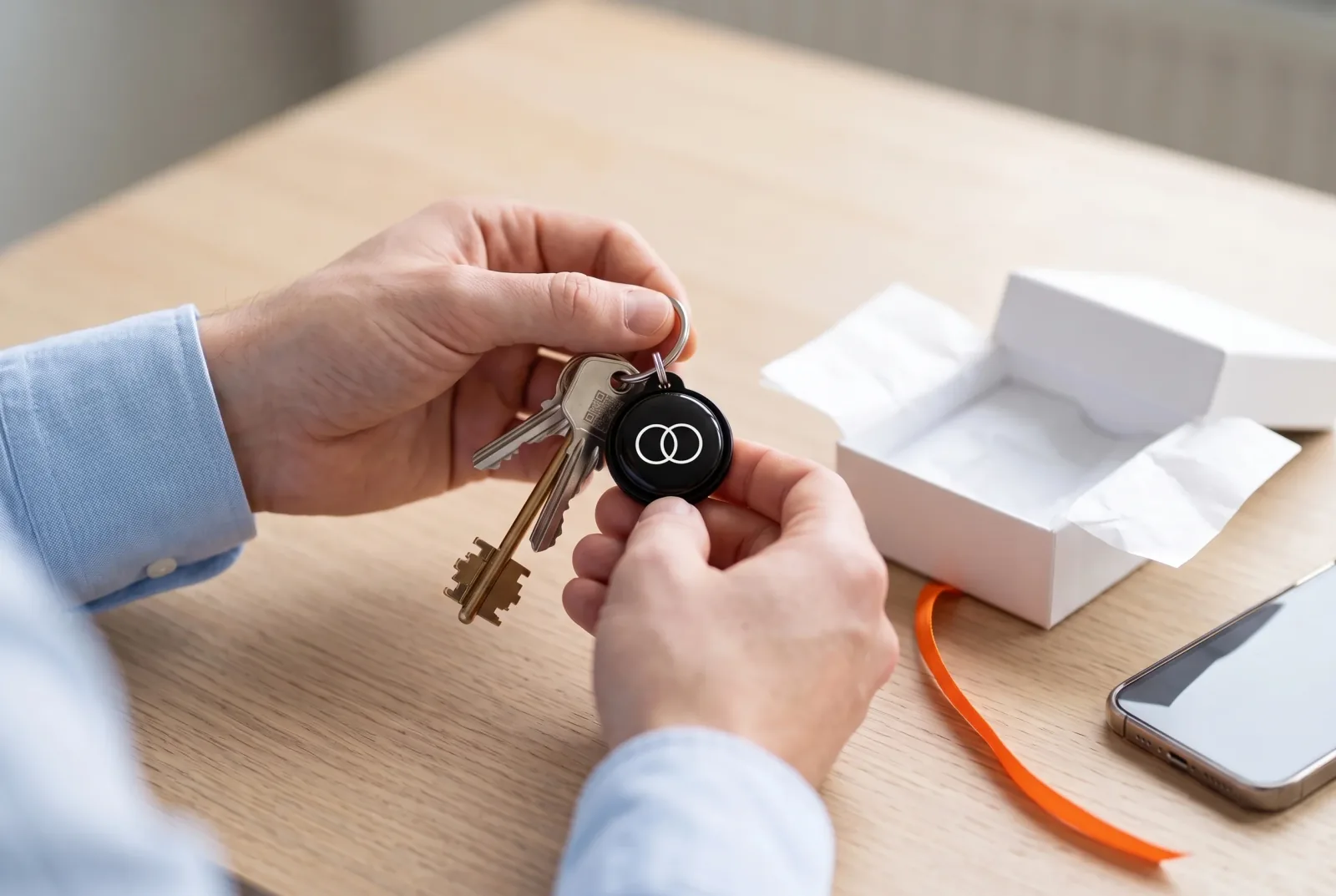
Promotional items with a contact function are built differently. A key finder or luggage tag with a QR code only delivers its use once the recipient activates it — once, in about two minutes, no app. And it’s exactly this activation moment that is the gap in the calendar that so far belonged to no one: full attention, a positive occasion (the recipient is just setting up their own loss protection), and one brand — yours — as the sender of it all.
What’s possible in the activation moment
What the recipient sees after activation is configurable — per campaign, changeable while running, because it lives on the landing page and not in print. In practice, six variants have proven themselves:
- Lead form — name, email, company, optionally a qualifying question; straight into the CRM.
- Appointment booking — your sales team’s calendar instead of a form; the gift becomes a conversation.
- Promotional code — connects the gift to the first purchase and makes the effect show up at the till.
- Traffic with attribution — a redirect to your campaign URL, cleanly attributed via UTM.
- Newsletter opt-in — a double opt-in at the moment of highest goodwill.
- Survey or NPS — feedback from people who are holding your gift in their hands right now.
What all six share: the contact arises with active consent and a documented point in time. That’s not only GDPR-clean — it also explains why these leads work better in follow-up than bought addresses: the person knows where the contact came from, and associates it with a gift rather than a cold call.
The honest limit of the method
So there’s no false impression: the mechanism is no magic trick that rescues bad gifts. Only what the recipient wants to keep and use gets activated — the contact function doesn’t force the touchpoint, it makes it possible. An item with no real practical value stays an item with no real practical value, now just with an unused QR code.
That’s why the order holds: first the use (loss protection for keyring, suitcase, collar — things whose loss hurts), then the brand, then the campaign. Whoever keeps to it gets the rarest commodity in the promotional-products business: a gift the recipient keeps, and a figure the finance team understands.
The new budget arithmetic
In the end, above all one sentence changes in the next budget meeting. Instead of “Promotional items pay into the brand” (true, only no one proves it), it becomes: “2,000 units handed out, this many activated, this many contacts, this many appointments — cost per lead: a fraction of what a comparable B2B lead costs us through advertising.”
That’s not a revolution in the promotional-products industry. It’s something more useful: its connection to the accountability that every other channel has long had to deliver.
FAQ
Is a lead won this way GDPR-compliant?
Yes — and cleaner than many bought-in lists: the contact arises through the recipient's active input and consent at the activation moment, documented with a timestamp. There's no grey area, because the recipient decides for themselves what they leave behind.
What activation rate can I count on?
There's no reputable blanket figure — the rate depends on the item, the handover context and the target group. That's exactly why measurability is the point: you see your rate in black and white after the first batch and can improve the handover and campaign in a targeted way.
Does this work even without your own landing page and IT project?
Yes. With the white-label model, tags, packaging and activation page are delivered ready-made in your corporate identity; the leads arrive by export or directly into the CRM (e.g. HubSpot, Salesforce). On your side, no one is involved except whoever hands out the gifts.