

← Klartext Business
QR Code or NFC in the Product? A Decision Guide for Manufacturers
Updated SilentLink-Team ≈ 3 min read
Key points
- QR costs practically nothing to produce (it's printed, lasered or stamped), but it's visible and only as durable as its surface. NFC costs per unit, but disappears invisibly into the product and survives abrasion.
- The decision rarely hinges on the technology, but on three product questions: how long does the function have to last? Is it allowed to be seen? And what can the per-unit costing bear?
- In practice the answer is often "both": QR as the visible, self-explanatory invitation — NFC as the robust channel beneath it. If you're unsure, start with QR and retrofit the product line later.
When a manufacturer adds a digital contact function to its products — so the lost suitcase, the lent-out bike, the forgotten tool finds its way back to the owner — the same question is always at the start: printed QR code or NFC chip? The honest answer up front: it isn’t a matter of faith, but a matter of product. In the end, both methods carry the same link. They differ in what they cost, what they can take, and how they feel.
What QR can do — and where its limit lies
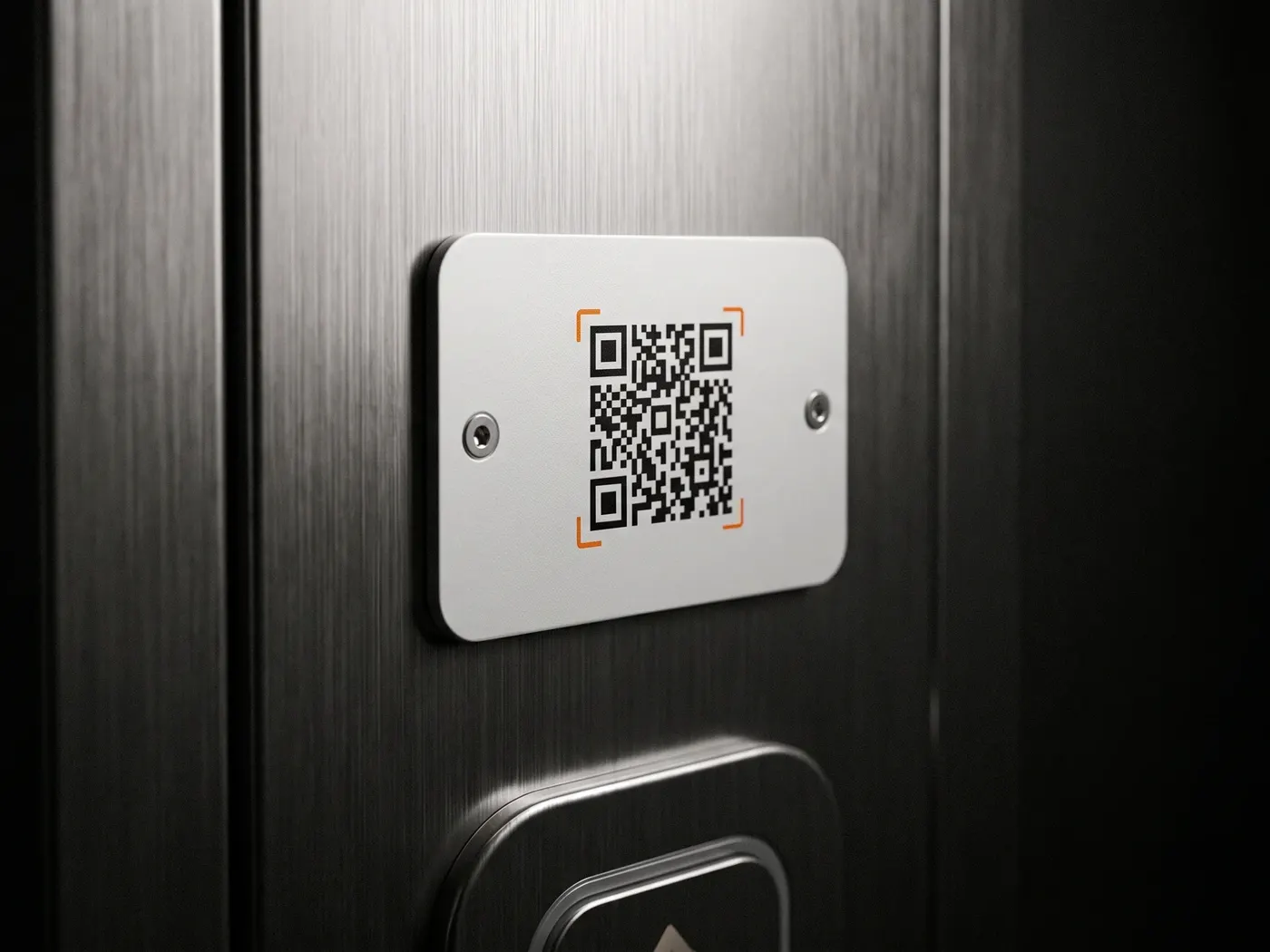
The QR code is, first of all, unbeatably cheap: it’s printed into the label, lasered into the housing or stamped into the tag — the hardware cost per unit is zero, and no production step has to be rebuilt. Any smartphone camera can read it, no app, no explanation; the square with the three corner marks is by now as self-explanatory as a light switch. And it works at a distance: even from a metre away, even from a photo.
Its limits are just as clear. It’s visible — which, depending on the product, forces a design decision — and it’s only as durable as the surface that carries it. The built-in error correction forgives scratches and partial damage surprisingly well; against large-area abrasion, fading print or a worn-out fabric label, it doesn’t help. The print quality and the substrate decide whether the code outlives the product or just the first season.
What NFC can do — and what it costs
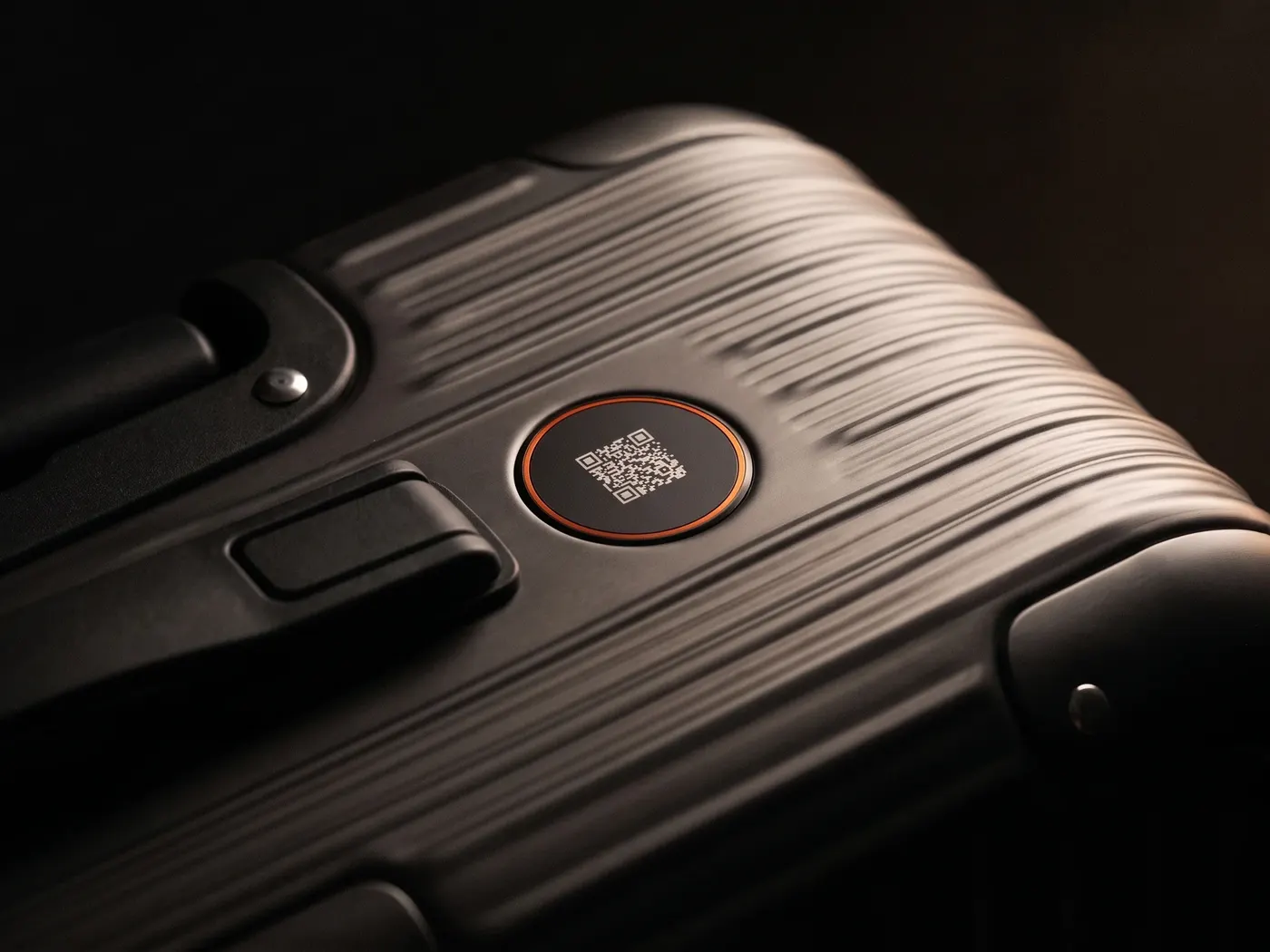
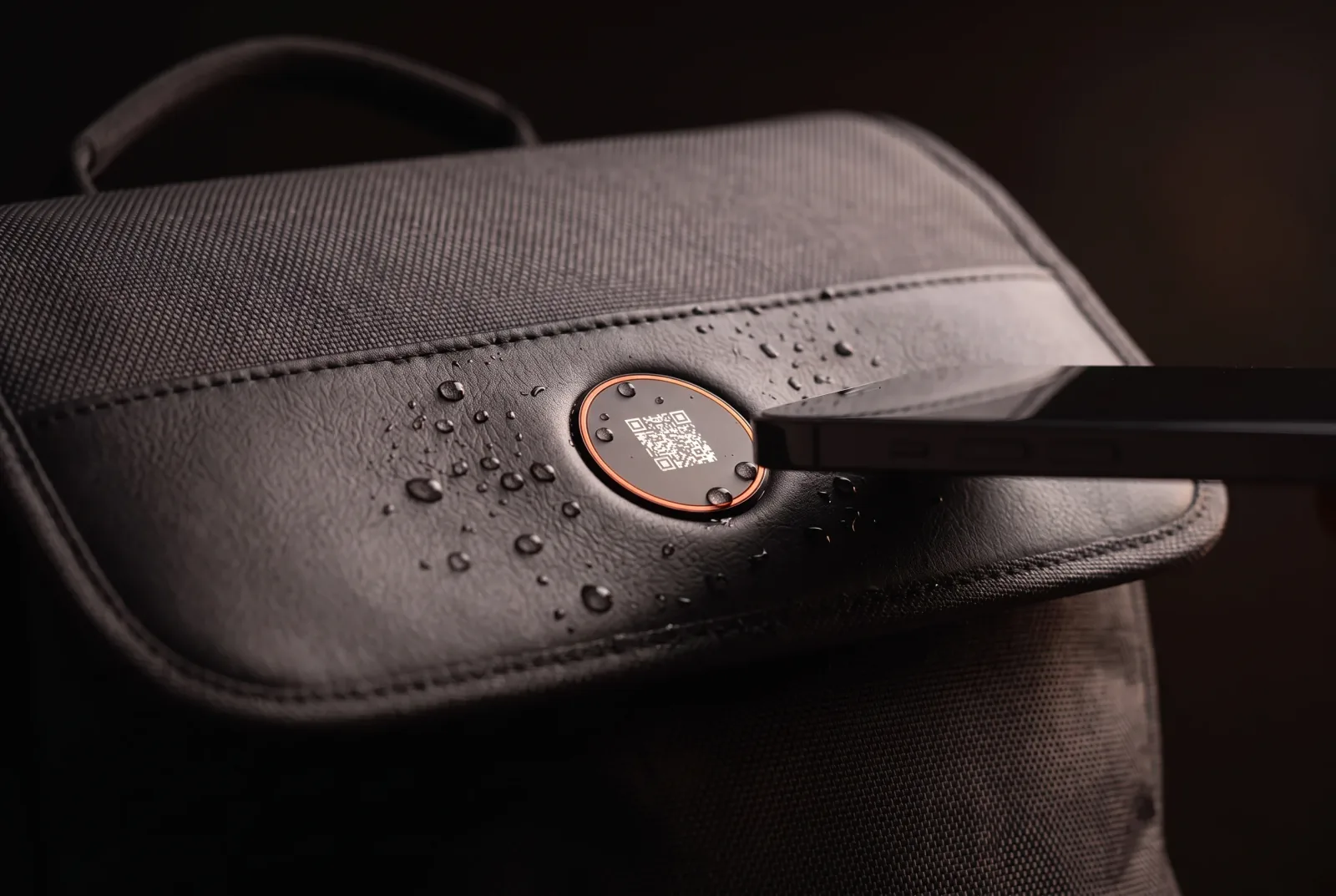
The NFC tag turns the profile around. It disappears invisibly into the product — worked into the label, under the shell, in the handle — and is thereby immune to everything that wears down the printed code: abrasion, dirt, fading. The gesture is pleasantly direct: hold the smartphone to the product, the link opens. Current iPhones and the vast majority of current Android devices handle this out of the box.
In return, NFC has a per-unit price — in our OEM production from the factory, ready-to-fit tags start at around €0.30 — and two physical quirks worth knowing: the read range is a few centimetres (so the finder has to know there’s something to read), and on metal surfaces you need special tags designed for it, otherwise the antenna stays mute. Both are solvable, both belong in the planning.
The three questions that really decide
In the integration talks we hold, the choice almost always comes down to three questions:
- How long does the function have to last? A trade-show lanyard has different requirements from a premium suitcase with a ten-year warranty. The longer and harder the product’s life, the more strongly it argues for NFC — or for a lasered rather than printed QR.
- Is it allowed to be seen? On some products the visible code is a feature: it actively invites the finder and signals the built-in extra to the buyer. On others, the design language forbids it — then the invisible chip is the only clean answer.
- What can the costing bear? On low-priced products with thin margins, the per-unit price decides; zero hardware cost is an argument there that beats everything else. On premium products the arithmetic shifts: there the chip price barely matters, while the impression matters all the more.
The unspectacular truth: often both
Lay both lists side by side and you see that the weaknesses cover for each other — and that’s exactly why the most common recommendation is, in the end, a hybrid: a visible QR code as the self-explanatory invitation that works everywhere, complemented by NFC where durability or comfort justifies it. It’s no accident that our own products are built exactly this way.
And if the decision is still hard: fortunately it isn’t a one-way street. The link behind code and chip stays the same — a product line that starts with printed QR can retrofit NFC in the next batch without anything changing in the system behind it. Starting beats debating to the end.
FAQ
Do all smartphones read NFC tags without an app?
Current iPhones and the vast majority of current Android devices read NFC tags out of the box: hold it to the product, the link opens. On older devices, support is inconsistent — which is another reason why combining it with a visible QR code is the safe default: every smartphone has a camera.
How durable is a printed QR code really?
As durable as the material it sits on. A code in a fabric label survives washing poorly, a lasered code on metal or a stamped one in a tag lasts the product's lifetime. Thanks to built-in error correction, QR codes cope with partial damage too — but large-area abrasion of the surface remains their natural limit.
Can someone simply photograph and copy the QR code?
Yes — but it gains them nothing: the code is a contact address, not a key and not a proof of authenticity. Whoever scans it can send the owner a message, no more. Where counterfeit protection is the concern, other methods are called for; for lost & found, copyability is irrelevant.