



← Klartext Business
Defect Reporting for Municipalities: How Tips From the Public Actually Get Through
Updated SilentLink-Team ≈ 3 min read
Key points
- The public is the densest inspection network a municipality will ever have — citizens see the defect days before the next inspection round. This network is only used if reporting costs less effort than walking on.
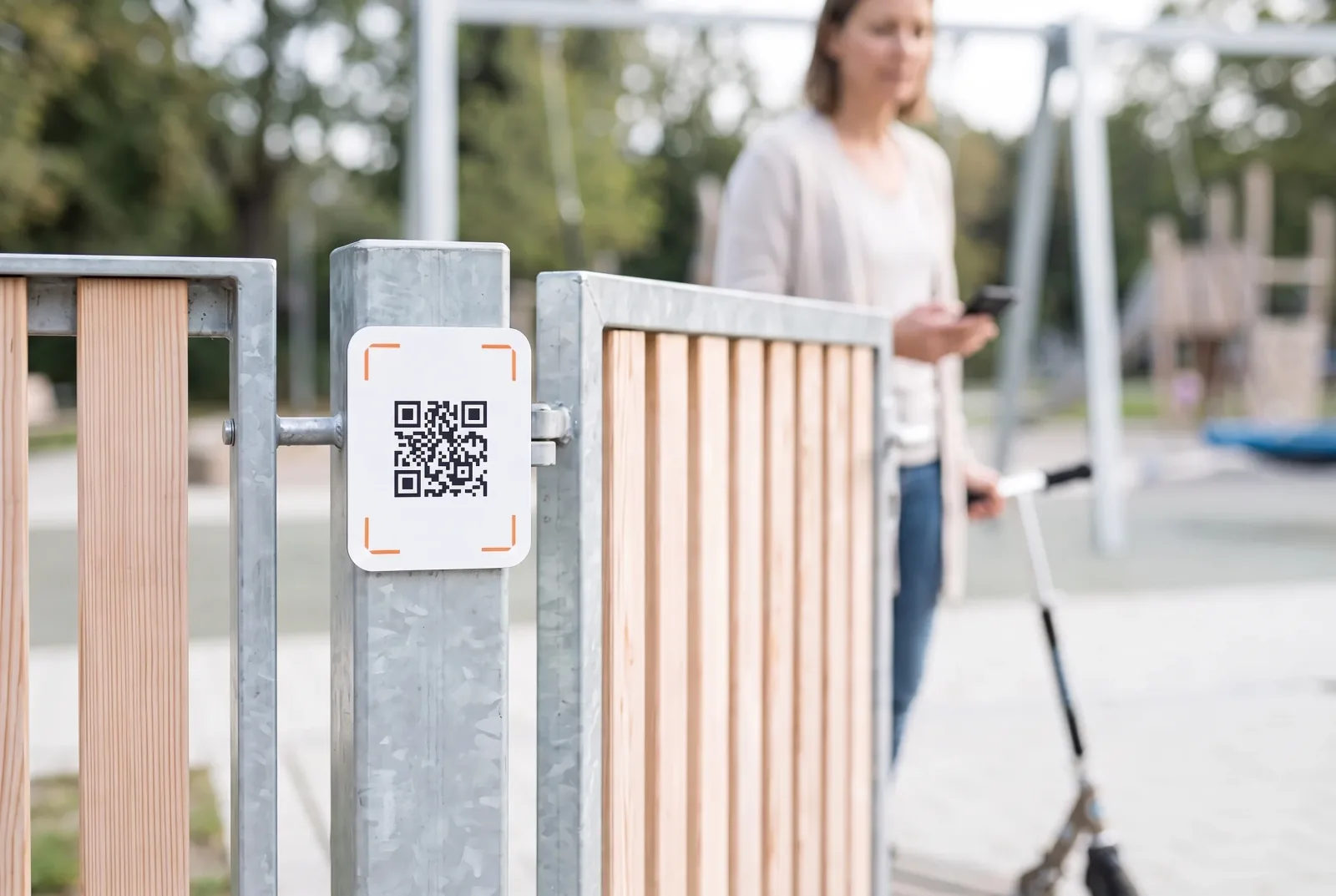
- Portals and reporting apps rarely fail on the technology, but on the situation: someone standing in front of the broken swing doesn't go looking for an app in the store or a form on the city website. The reporting route has to begin at the object itself.
- A reporting point on the object already knows the location and who's responsible — the tip arrives structured at the right department or depot, around the clock, without an app and without signing in. For emergencies, the emergency number still applies.
A municipality can inspect its playgrounds as conscientiously as it likes — there are always days, sometimes weeks, between two inspection rounds. In that time, someone stands in front of the cracked swing chain: a mother, a dog owner, a jogger. Hundreds of pairs of eyes see the defect long before the authority can. That, soberly considered, is the densest inspection network a city will ever have — and it works for free, around the clock, at every object across the town.
The uncomfortable question is why this network reports so rarely.
The barrier stands between seeing and saying
Anyone who seriously tries quickly sees what the trouble is. Which department is responsible — parks, civil engineering, the depot, the transit company? The phone number is valid during office hours; the defect is noticed on a Saturday evening. The city’s online form wants an address, but the bus stop has no house number. And the reporting app that might exist: who installs an app for a one-off tip?
Each of these stations is a way out, and most people take one of them — not out of disinterest, but because the effort is out of all proportion to their own benefit. It’s the same quiet trade-off we described for buildings and equipment, only with a sharper public price: the unreported defect on the swing, the dark underpass or the loose paving stays put until the inspection round finds it — or the incident does.
The reporting route has to begin at the object
Portals and apps aren’t wrong; they serve the committed, who know the route and are willing to take it. But the reach comes from the others — and you only reach them if the reporting route begins where the defect is noticed: at the object itself.
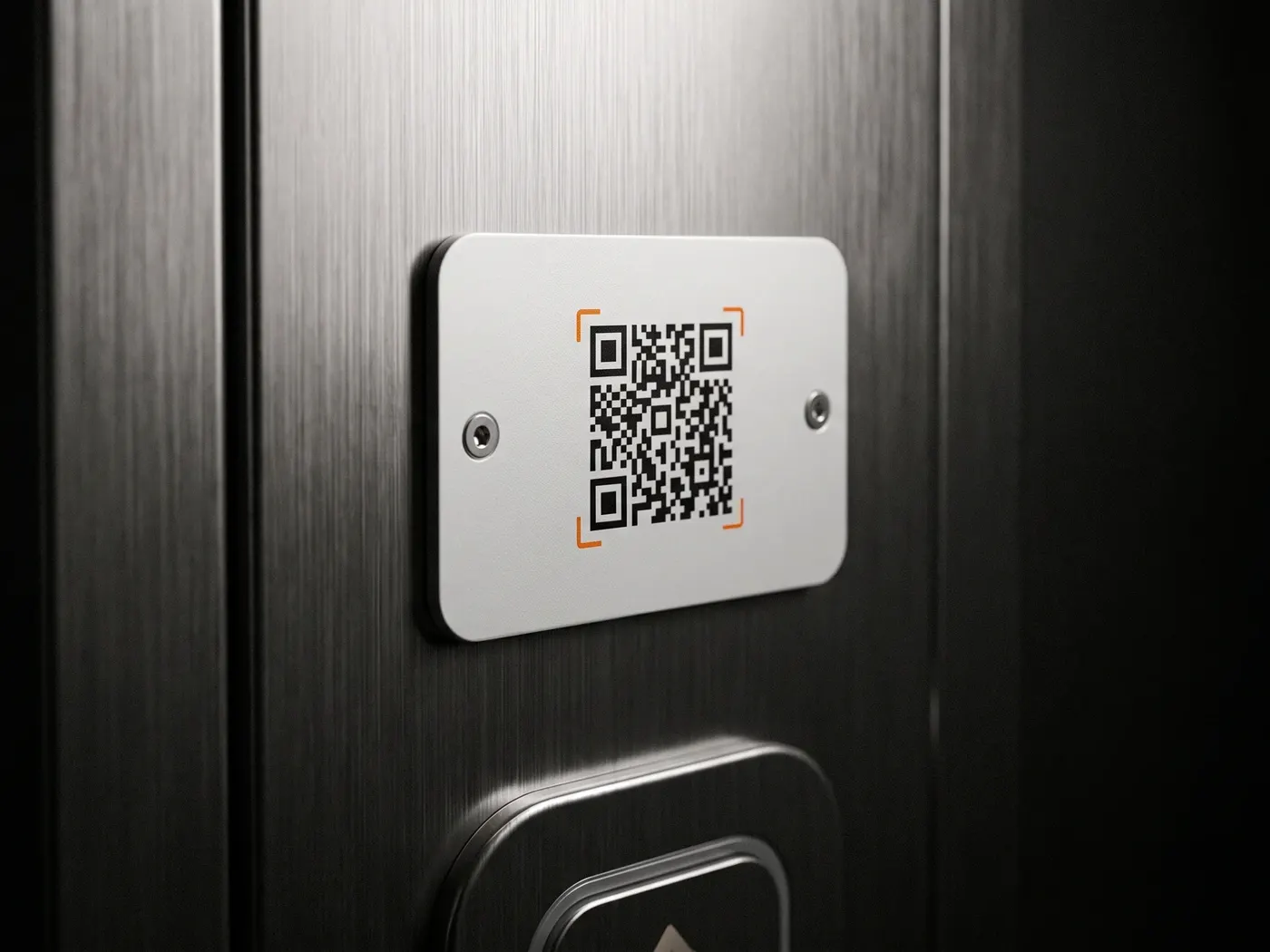
A weatherproof reporting point on the swing, the bus stop, the junction box fundamentally changes the situation. The QR code already knows its location and who’s responsible — the question “which department, which address?”, on which phone reports fail, is answered before the citizen even has to ask it. The scan with the ordinary phone camera opens a short topic selection (“Damaged”, “Soiled”, “Lighting broken”), add a photo, send. No app, no account, no waiting — and it works at 10 p.m. just as well as on a Sunday morning.
On the administration side, what arrives is something you can work with: object, location, topic, photo, timestamp — delivered to the unit responsible for exactly this object, rather than into a shared inbox that first has to be sorted. “Something’s broken somewhere in the city park” becomes “Play unit 14, City Park North, chain damaged, photo attached”.
Honesty belongs in the concept
There are two things a municipality should state clearly here. First: A defect reporter is not an emergency line. In the case of imminent danger, 112 and 110 belong at the very top of every form — the reporting point is built for the important, not the urgent. Second: whoever reports wants to see that it has an effect. Nothing smothers the public’s willingness faster than the feeling of reporting into a void; nothing strengthens it more reliably than the repaired swing two days after the tip.
In the end, the arithmetic is the same for both sides: the citizen gives fifteen seconds — the municipality gets an inspection network that no staffing plan in the world could match. You just have to bring it to the object.
FAQ
Our city already has an online defect reporter — why bother with reporting points too?
The two routes complement each other. The portal works for the committed, who know it and are willing to make the effort. The reporting point on the object picks up everyone else: it's visible exactly when the defect is noticed, and already carries the location and who's responsible within it — no one has to know what the portal is called or which department is in charge.
Aren't such reporting routes misused for nonsense?
The barrier for that is higher than you'd think: unlike an anonymous comment online, to file a report you have to be physically standing in front of the object and scan it. A structured topic selection instead of free text lowers the nonsense share further, and because every report is tied to a specific object, repeat mischief stands out quickly — and the affected reporting point can be adjusted in a targeted way.
What about dangerous situations?
For that, a defect reporter is the wrong tool, and it should say so clearly: in the case of imminent danger — fire, accident, acute risk of injury — 112 and 110 belong at the very top of every reporting form. The reporting point is built for everything that's important but not urgent: the defect that would otherwise stay undiscovered for weeks.