

← Klartext Business
QR and NFC Solutions for Business: 8 Questions to Ask Every Provider
11 Jun 2026 SilentLink-Team ≈ 4 min read
Key points
- The most important differences between QR/NFC providers can't be seen in the demo: they're in the data flow, in the operation, and in the question of what becomes of the codes when the contract ends.
- The single hardest question is the forced app on the other side: any solution that demands an installation from the finder, reporter or customer loses exactly the people it was built for.
- Ask every provider the same eight questions — us included. You recognise a serious answer by the fact that it gets specific: server location, contract details and exit scenario instead of brochure-speak.
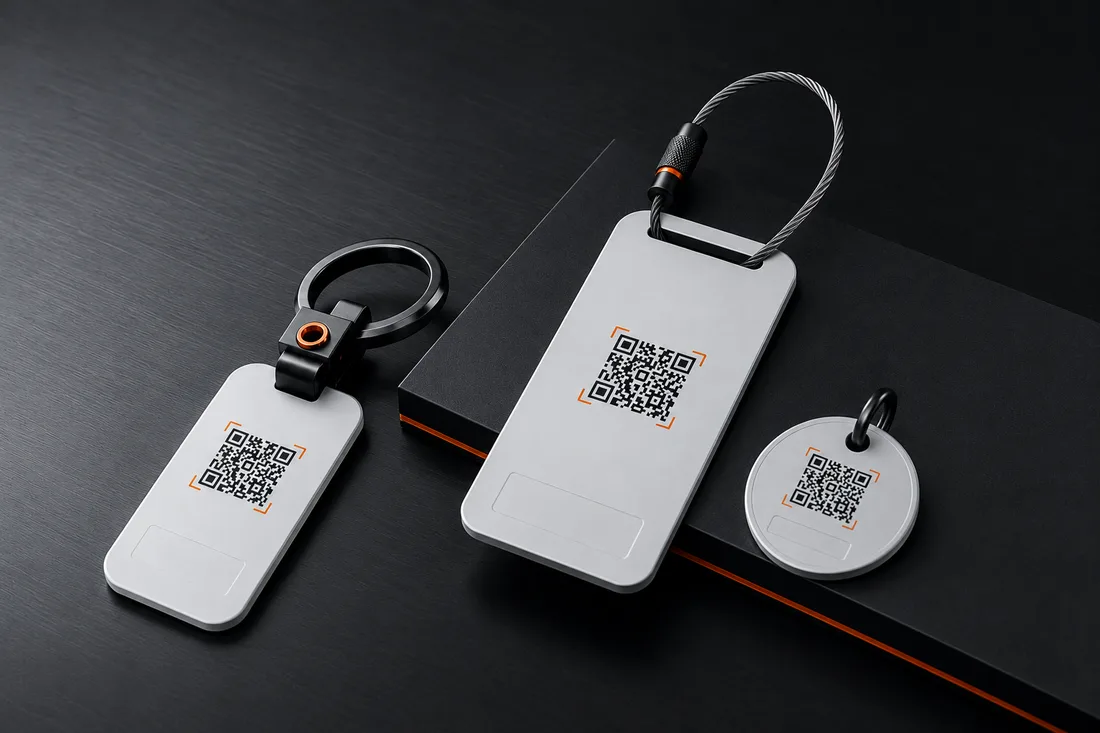
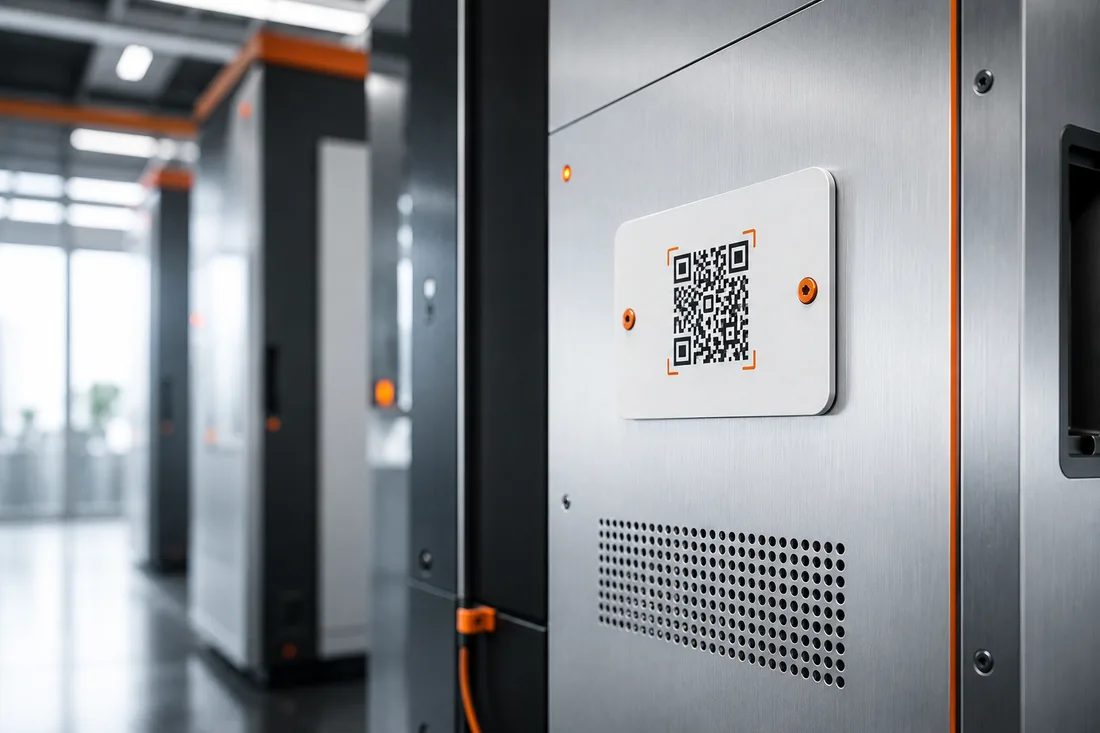
Promotional items with a contact function, reporting points on devices, codes built into the product at the factory: the market for QR and NFC solutions is growing, and the brochures all look alike. The differences that really count in operation are rarely in them — they only show up when you ask. Here are the eight questions that reliably bring those differences to light. Ask them of every provider. Explicitly of us too.
1. Does the other side have to install anything?
The most important question first, because it’s the one on which solutions most often fail in everyday life: what does the person who scans have to do — the finder, the reporter, the end customer? Every app installation, every registration, every account on this side costs exactly the people the system was built for: the occasional helpers, whom you can neither train nor oblige. The benchmark is the ordinary smartphone camera — anything beyond that needs a very good justification.
2. What data does whoever scans see?
A contact point should connect without exposing. Ask specifically: does the scanner see the owner’s name, phone numbers or addresses — or does the platform relay the contact without disclosing that data? On promotional items that carry your brand, this is not just data protection but brand protection: what the recipient experiences there reflects back on you.
3. Where does the data run — and on what contractual basis?
Server location, sub-processors, data processing agreement under Art. 28 GDPR: these aren’t formalities but the documents your data protection officer will request anyway. A provider who hesitates or stays vague here won’t get more precise once operations are running. EU hosting should be the precondition, not the selling point.
4. What happens to the codes when the contract ends?
The least-asked and perhaps most expensive question. QR codes and NFC tags are physically out in the world — on promotional items in trouser pockets, on devices in buildings, in products on the shelf. If the provider shuts down or you part ways, all these codes point to a dead URL, and your promotional item becomes an annoyance with your logo on it. Clear it up before the first order: transition periods, redirects, data export. Reputable providers have a prepared answer to this question — they know why it’s asked.
5. How deep does the branding really go?
“In your design” can mean many things: from a logo printed onto someone else’s platform to a full white-label implementation in which tag, landing page and packaging carry your corporate identity and the provider stays invisible. Have them show you what the recipient sees after the scan — that’s where it’s decided whose brand experience you’re giving away.
6. Can the system be tailored to the use case?
A reporting point on the lift needs different topics, fields and recipients from one in the washroom; a trade-show campaign needs different activation pages from a client gift. Ask what can be configured per location of use — and what looks the same for all customers. Rigid one-size-fits-all forms give away that the product was built for a different use case than yours.
7. What gets measured — and does the result belong to you?
Scans, activations, contacts, reports: what metrics does the system deliver, in what form (dashboard, export, CRM connection), and can you take the data with you? For promotional items, measurability is half the buying argument — it shouldn’t be chained to a proprietary dashboard that vanishes with the contract.
8. What does rollout look like — honestly?
Finally, the effort question: what stands between the signature and the first productive day? The right answer is unspectacular — configure, produce, attach or hand out. Suspicion is warranted if there are workshops, integration projects or end-user training sessions before the start: a technology whose purpose is lowering hurdles shouldn’t begin by building new ones.
Eight questions, none of them technically sophisticated — and that’s exactly the point: they test not the demo, but the operation behind it. A provider who answers all eight concretely, with server location, contract detail and exit scenario instead of brochure-speak, has already passed the most important test: they thought about these questions before you asked them.
FAQ
What specifically matters in a GDPR review?
On three things: where the data is processed (server location, sub-processors), is there a data processing agreement under Art. 28 GDPR, and what data does the person scanning actually see? A data-minimising solution shows the scanner no personal data of the owner — the relaying runs through the platform, not through disclosed phone numbers. The final assessment belongs with your data protection officer.
What is the exit scenario — and why does it matter so much?
QR codes and NFC tags are physically in circulation: on thousands of promotional items, devices or products. If the provider shuts down or you cancel, all these codes point to a dead URL — the promotional item becomes an annoyance. So ask before signing: what happens to active codes after the contract ends, are there transition periods, are redirects possible?
Do we need an IT project to roll it out?
With a well-built solution, no: on the user side the smartphone camera suffices, and on the company side reports and contacts arrive in existing inboxes or via an interface into the CRM. You should get suspicious if, before the first day in operation, there are workshops, installations or training sessions for the end users — those are exactly the hurdles the technology is supposed to remove.