

← Klartext Business
Why Faults Go Unreported — and What Every Silent Fault Costs
10 Jun 2026 SilentLink-Team ≈ 4 min read
Key points
- Someone who doesn't report a fault is rarely indifferent — they're facing a bad deal: find who's responsible, find the number, wait on hold, describe the device. So the report never happens.
- The silent fault is the most expensive one: it keeps running until it's noticed on the next inspection round, the next complaint or the consequential damage — and until then, the company pays for it every day.
- The reporting rate isn't a question of motivation, but of friction. Whoever shortens reporting to a scan at the device gets tip-offs from people they could never have trained.
In every office building, somewhere, hangs this note. “OUT OF ORDER!!”, handwritten, taped to the coffee machine. You can smile at it — or take it seriously for what it is: a reporting system the staff built for themselves, because the official route was too expensive.
Expensive not in euros, but in effort. Anyone wanting to report a fault first has to answer questions that have nothing to do with the fault: who’s responsible — facilities, IT, the landlord, an external contractor? Which number, which address, which portal? And when the hotline finally picks up: what’s this device even called, which floor, which room number? Each of these questions is a way out. Most people take one of them.
The silent fault is the most expensive one
What isn’t reported doesn’t disappear — it keeps running. The dripping connection becomes water damage, the flickering stairwell light becomes a dark stairwell, the striking vending machine becomes the operator cancelling the site. Between the moment a person first sees the fault and the moment the service team learns of it lies the most expensive stretch of the whole process: downtime with no countermeasure.
The insidious part: these costs show up in no report. What gets counted is what was reported — the response time from the ticket, the time until repair. The days before the ticket, no one counts, because no one knows about them. A low number of reports looks like a healthy operation in the statistics. It can just as easily mean that reporting is too much of a hassle.
How large this invisible item becomes can be estimated: the fault-cost calculator sets a year’s avoidable follow-up costs against the cost of a reporting system — with assumptions you set yourself.
It’s friction, not indifference
The convenient explanation goes: people just don’t care. The sticky note refutes it. People who go to the trouble of writing a note and hunting for tape aren’t indifferent — they’ve simply chosen the route that was cheapest for them. That it’s the worst one for the company (no recipient, no assignment, no documentation) can hardly be held against them.
We’ve described elsewhere why even honest people drive on after a parking bump: not out of malice, but because the correct route costs disproportionately much (“Effort Beats Decency”). In a building, the same mechanics apply, only milder: no one commits a crime by not reporting the broken lift. They just make the same quiet trade-off — and effort wins almost every time.
Lower the barrier, not raise the morals
From this follows the real lever. Appeals (“Please report faults to the management!”) don’t raise morals, because morals were never the problem. What has to be lowered is the effort — and at the site of the fault, not in the intranet three clicks deeper.
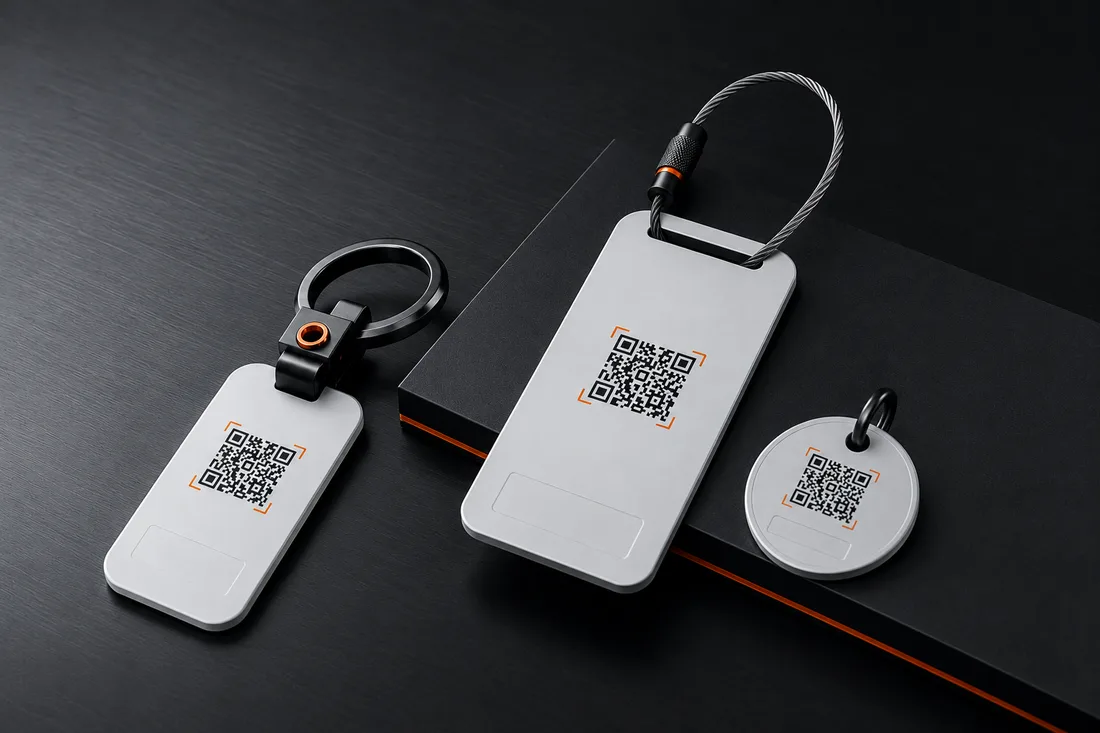
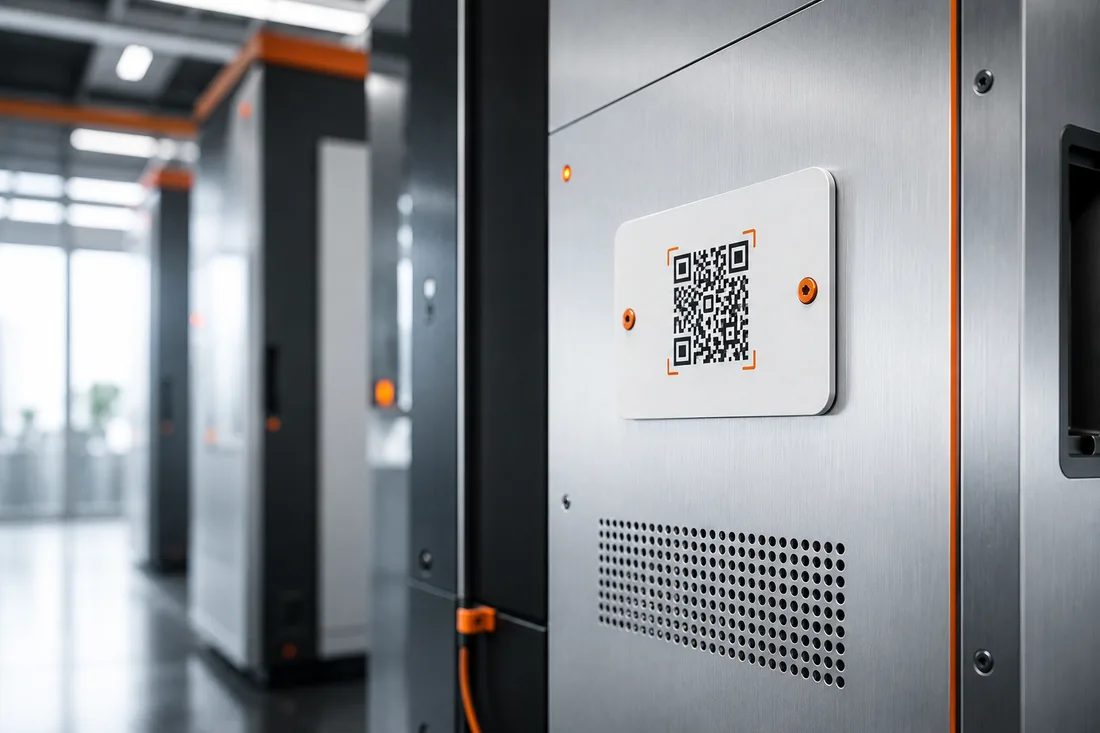
Concretely: the reporting route has to begin where the person is already standing — at the device itself. It must presuppose nothing that visitors, tenants or passers-by don’t have: no app, no account, no knowledge of who’s responsible. And it must answer the questions on which reports fail, by itself: which device, which location, who’s responsible — all of that a reporting point on the device can already know before the reporter has typed the first word. What remains is the only question a person really has to answer: What’s the matter?
When reporting costs about as much as taking a photo — a scan with the phone camera, tap a topic, send — then suddenly the very people you could never have trained report too. The visitor who notices the mess. The tenant who’s been seeing the flicker in the stairwell for days. The colleague who would previously have written the note.
What this reporting route looks like in practice depends on the place: as a reporting system in facility management across all properties, as a defect reporter for property managers in the stairwell, as a fault report for vending operators at the machine, or as a municipal defect reporter at the playground and bus stop — the same mechanics, each tailored to the case.
So the sticky note on the coffee machine isn’t an anecdote. It’s a requirements spec: this simple, this close to the device and this anonymous is how the official reporting route has to be if it’s going to win. Anything beyond that loses — to tape and to silence.
FAQ
Isn't it simply down to indifference when nobody reports anything?
Experience says otherwise: the same people who give up on the hotline write handwritten "Out of order!" notes and stick them to the machine. The will to help is there — what's missing is a route that costs less than a sticky note. Our essay "Effort Beats Decency" describes exactly this observation for road traffic; in buildings and on equipment it applies just the same.
Isn't an easily reachable service hotline enough?
For the reporter, a hotline is the most expensive form of reporting: find the number, wait, describe out loud what you're looking at. It works for your own staff who have instructions — but not for visitors, tenants or passers-by, whom no one can oblige or train. For these groups, the barrier alone decides.
What does a lower reporting barrier actually achieve?
Faults get noticed where they happen — not only on the next inspection round. Reports arrive structured (device, location, topic, photo) instead of as "something's stuck somewhere". And the reporting rate becomes an early indicator: whoever gets more tip-offs repairs sooner, before the anomaly turns into an outage.